
Leave Your Message

China Top 10 Current Transformer Cabinet Manufacturers

China’s leading Current Transformer Cabinet manufacturers serve utilities, industrial plants, and infrastructure projects with different measurement needs. A cabinet may look like a steel enclosure, yet its internal layout affects safety, accuracy, and maintenance. Buyers should examine current-transformer ratios, insulation, busbar clearances, terminal access, and protection against dust or moisture. Small details matter.

Transformer specialist Professor S. V. Kulkarni’s engineering work offers relevant context. The following is an editorial principle, not a verbatim quotation from him: “Reliable measurement depends on sound design, careful installation, and disciplined testing.” That distinction matters. A credible manufacturer should provide clear drawings, material specifications, routine-test records, and support for commissioning. Ask how the cabinet accommodates the site’s fault levels, operating environment, and future expansion. A neat nameplate alone proves little.

This top-10 overview is intended to help readers compare manufacturers, not declare one universal winner. Look for documented quality controls, consistent delivery, customization capability, and responsive technical service. Inspect details such as door seals, grounding points, cable-entry plates, and readable labels. They matter during real maintenance. Still, supplier claims can be difficult to compare, and a polished catalogue does not guarantee a smooth installation. Verify project references and confirm that stated specifications match the drawings and test documents. The comparison should support careful evaluation, not replace engineering review.
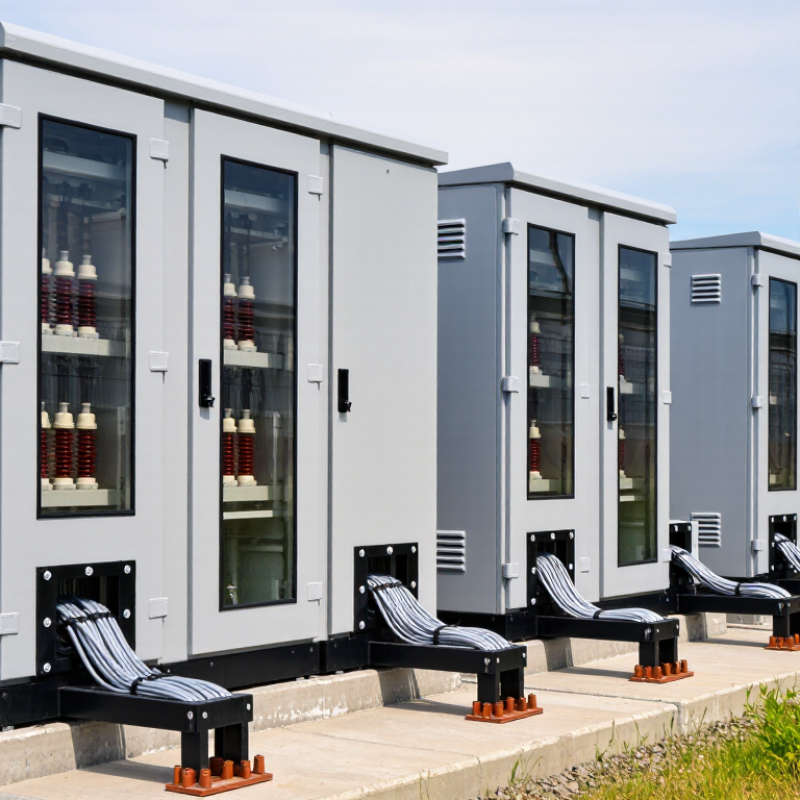
China Top 10 Current Transformer Cabinet Manufacturers

Understanding Current Transformer Cabinets and Their Applications

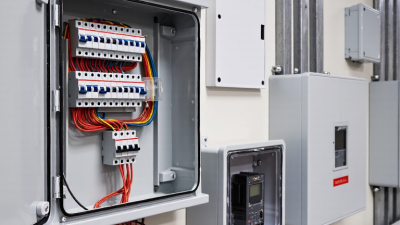
A current transformer cabinet houses current transformers, secondary terminals, and related metering or protection circuits. It helps convert high primary current into a smaller, measurable signal for instruments and relays. The cabinet also keeps wiring organized and shields components from dust, accidental contact, and mechanical damage.

Details matter. Engineers typically check the primary-current range, transformation ratio, accuracy class, burden, insulation level, and expected fault conditions. In a substation, the cabinet may support protection relays and revenue metering; in a factory, it can monitor feeders supplying motors or production lines. Clear labels and accessible test terminals make inspection easier. Cable entries should also suit the actual route, not just the drawing.

Safety comes first. An energized current transformer’s secondary circuit should not be left open; approved shorting terminals and grounding arrangements must follow the equipment design. Cabinet size matters, too. Crowded wiring can complicate maintenance, while an oversized enclosure may waste space and still offer poor access. One detail is easy to underestimate: condensation. In damp or temperature-changing rooms, suitable ventilation or heating may be needed, based on site conditions. There is no universal cabinet specification, so engineers should verify ratings and installation requirements against project documents and applicable standards.
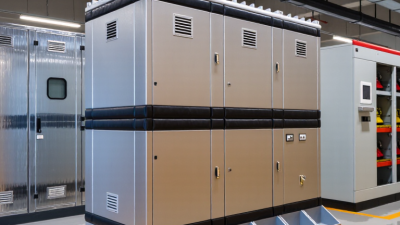
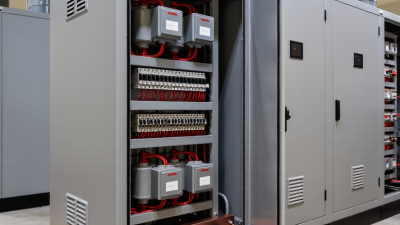
Common Current Transformer Ratios for Cabinet Applications

How to read this chart: These are examples of commonly available current-transformer ratios, shown with a 5 A secondary rating. The primary rating should be selected to suit the circuit’s expected load and the requirements of its metering or protection equipment; actual specifications vary by application.

How China’s Current Transformer Cabinet Industry Is Structured

China’s current transformer cabinet industry is best understood as a project-led supply chain, not a single product market. Upstream suppliers provide copper, electrical steel, insulation, enclosures, and switching components. Cabinet makers then integrate current transformers, busbars, meters, and protection devices to meet project specifications. Some focus on standard models; others build cabinets around custom drawings. The boundary is not always tidy.

The China Electricity Council’s 2023–2024 power supply and demand report recorded 527.5 billion yuan in national grid investment for 2023, up 5.4% year on year. This is a useful demand indicator, though it does not measure cabinet sales directly. Grid upgrades, substations, industrial plants, and renewable connections all require measurement and protection equipment. Buyers therefore compare more than price: rated voltage, accuracy class, insulation design, heat dissipation, and ease of maintenance matter. IEC 61869 provides relevant international requirements for instrument transformers, while project-specific acceptance criteria still vary.

Tips: Check the wiring diagram, test records, and spare-part list before comparing quotations. A polished enclosure can hide weak documentation. That detail is easy to overlook.

Profiles of China’s Top 10 Current Transformer Cabinet Manufacturers

Profiles of China’s Top 10 Current Transformer Cabinet Manufacturers

China’s current transformer cabinet sector serves expanding power networks, industrial plants, and renewable-energy projects. The National Energy Administration reported that China’s power-grid investment reached 608.3 billion yuan in 2024, up 15.3% year on year. This figure signals strong infrastructure activity, though it does not measure cabinet demand directly.

These ten manufacturer profiles focus on practical differences, not promotional claims. They compare product ranges, rated voltage, current and accuracy classes, enclosure protection, and customization options. Some manufacturers emphasize standardized cabinets for substations. Others support project-specific layouts, busbar arrangements, or metering requirements. Details matter. Buyers should check whether a supplier provides routine test records, clear wiring diagrams, and traceable component specifications. Factory capacity is useful, but it cannot replace documented quality control.

The profiles also consider engineering support, delivery capability, and experience with indoor or outdoor installations. Ask how each manufacturer handles temperature rise, insulation coordination, and maintenance access. A neat cabinet may still be difficult to service. I would also compare stated capabilities against actual test documents; catalog language can be vague. These checks help identify manufacturers suited to a project’s operating conditions rather than relying on ranking alone.

Comparing Manufacturers by Products, Technology, and Certifications

Comparing China’s current transformer cabinet manufacturers requires more than checking rated voltage and price. The International Energy Agency’s Electricity 2024 report projects global electricity demand will grow by an average of 3.4% annually from 2024 to 2026. That growth makes dependable measurement and protection equipment increasingly important. Compare cabinet configurations, current ranges, insulation levels, enclosure protection, and compatibility with indoor or outdoor installations. Then examine the current transformers’ accuracy classes, thermal ratings, and short-time withstand capacity. Details matter. A cabinet with clearly labeled secondary wiring and accessible test terminals can save time during commissioning.

Technology claims need evidence. Ask for type-test reports against relevant IEC 61869 requirements, test conditions, and the laboratory’s accreditation scope. For digital monitoring, check communication protocols, data accuracy, and what happens when auxiliary power fails. ISO 9001 can indicate a quality-management system, but it does not certify a cabinet’s electrical performance. Review certificates, report numbers, and factory quality records directly. A polished datasheet is not proof of field reliability. Nor does a longer feature list always mean a better product. One weak point in comparisons is that test results may not reflect the buyer’s actual operating temperature, fault level, or maintenance routine.

China Top 10 Current Transformer Cabinet Manufacturers - Comparing Manufacturers by Products, Technology, and Certifications

Comparison note: Company names and brands are intentionally omitted. The profiles below are non-ranked product-capability categories, not verified records of ten specific manufacturers. Product ranges vary by design; confirm ratings, test reports, and certificates directly with each supplier before procurement.

Profile Typical Product Focus Common Voltage Classes CT Accuracy and Protection Classes Technology and Construction Relevant Standards to Check Certification and Verification Best-Fit Application
Profile 1 Low-voltage metering and protection CT cabinets Up to 0.66 kV, subject to the specific design Metering classes may include 0.2, 0.2S, or 0.5; protection classes may include 5P or 10P Typically indoor, low-voltage assemblies with enclosed CTs and accessible secondary terminals IEC 61869-1 and IEC 61869-2; GB/T 20840.1 and GB/T 20840.2, where applicable Request the exact model’s type-test report and applicable conformity documents. ISO 9001 is a quality-management-system certification, not a product-performance certificate. Low-voltage distribution, metering panels, and equipment monitoring
Profile 2 Indoor medium-voltage CT cabinets for switchgear lineups Common system classes include 10/12 kV Metering and protection classes are selected to match the load, relay, and measurement requirements Often uses cast-resin-insulated indoor CTs installed in a metal-enclosed switchgear assembly IEC 61869-1/-2 for instrument transformers; IEC 62271-200 for applicable metal-enclosed switchgear assemblies Check CT and complete-assembly test evidence separately; verify ratings against the approved drawings and nameplate. Indoor substations and medium-voltage distribution systems
Profile 3 Compact CT cabinets for space-constrained installations Commonly specified for 10/12 kV systems; confirm the rated voltage for each design Accuracy and protection classes depend on the selected CT core and burden Compact arrangement intended to integrate with a switchgear bay; dimensions and clearances are project-specific IEC 61869-1/-2; IEC 62271-200 when supplied as part of a qualifying switchgear assembly Request dimensional drawings, insulation-level data, temperature-rise evidence, and the relevant type-test reports. Retrofits, compact substations, and space-limited indoor electrical rooms
Profile 4 Medium-voltage cabinets with multiple CT cores Common system classes include 10/12 kV and 24 kV Separate metering and protection cores can be specified; class selection must follow the protection and metering design Multi-core CT arrangements support independent measurement and protection circuits IEC 61869-1/-2; GB/T 20840.1/.2, where required by the project Confirm each core’s ratio, accuracy class, rated output, and terminal allocation in the test report and drawings. Distribution substations requiring separate revenue metering and relay protection
Profile 5 Outdoor CT equipment and weather-protected installations Voltage class is design-specific; medium-voltage installations may include 24 kV or 40.5 kV systems Available classes depend on the CT design and specified service conditions Outdoor construction may use oil-insulated or other outdoor-rated designs; enclosure and insulation details must be confirmed IEC 61869-1/-2; check applicable environmental and switchgear standards for the supplied assembly Verify outdoor suitability, creepage distance, pollution assumptions, sealing, and test documentation for the exact model. Outdoor substations and installations exposed to weather
Profile 6 High-voltage CT products for substation applications Voltage classes depend on the product family and project specification Specified by the application; confirm the metering or protection class and associated performance data May use oil-insulated, gas-insulated, or other high-voltage construction; the technology is product-specific Applicable parts of IEC 61869, including IEC 61869-1 and the relevant product-specific part Require model-specific type tests, routine-test records, and evidence that the rated insulation level matches the system. Substations and high-voltage measurement or protection circuits
Profile 7 Protection-focused CT cabinets Selected for the system voltage and switchgear design Protection classes can include 5P, 10P, or PX where specified; confirm the required protection performance with the relay design Core design and secondary wiring are configured around relay inputs and fault-current requirements IEC 61869-1/-2; applicable switchgear standard for the complete assembly Check the CT excitation or accuracy data, burden, ratio, and protection calculations; do not infer performance from the class label alone. Feeder, transformer, and busbar protection circuits
Profile 8 Precision metering CT cabinets Available voltage class depends on the selected CT and cabinet configuration Metering classes may include 0.2, 0.2S, or 0.5 when specified and supported by test evidence Designed around measurement accuracy, specified burden, and secure secondary connections IEC 61869-1/-2 and applicable national requirements for the intended metering use Request test results at the specified burden and operating conditions; verify any legal-metrology approvals required by the project. Energy measurement and substation metering circuits
Profile 9 Custom-engineered CT cabinets Project-specific; confirm rated voltage and insulation level in the technical offer Ratio, core count, accuracy, burden, and protection class are specified to order May be adapted for special layouts, terminal arrangements, or interface requirements Relevant parts of IEC 61869 and the applicable assembly standard for the supplied product Review the approved drawings, bill of materials, routine-test plan, and deviations list before manufacture. Replacement projects and installations with non-standard interfaces
Profile 10 Export-oriented CT cabinets and assemblies Configured to the destination market’s system voltage and project specification Classes and ratings must match the destination utility or project requirements Product documentation and construction are prepared for the applicable project and market requirements IEC 61869-1/-2 and other standards expressly required by the contract or destination market Verify certificate scope, issuing body, model coverage, validity, and acceptance by the end customer; do not assume one certificate covers every product. International EPC projects and cross-border procurement

Procurement check: Compare the exact CT ratio, rated primary and secondary currents, accuracy or protection class, rated output, insulation level, frequency, service conditions, and cabinet interface. Standards and certificate applicability depend on the product and project specification.

Factors to Consider When Choosing a Chinese Manufacturer

China Top 10 Current Transformer Cabinet Manufacturers

Factors to Consider When Choosing a Chinese Manufacturer

Choosing a Chinese current transformer cabinet manufacturer starts with matching the equipment to the site. Confirm rated voltage, primary and secondary current, accuracy class, burden, insulation level, and short-time withstand current. Ask for test reports tied to the exact model, not a similar product. Small details matter.

The International Energy Agency’s 2023 report, Electricity Grids and Secure Energy Transitions, says annual grid investment needs to rise from about $300 billion to over $600 billion by 2030. That figure covers grids broadly, not current transformer cabinets alone, but it highlights the need for dependable equipment. Check whether the manufacturer can provide routine and type-test records, calibration traceability, and clear production timelines. Compare the cabinet drawings with your installation: cable entry, busbar clearance, earthing points, ventilation, and enclosure protection rating. Ask for proof.

Review applicable standards, including IEC 61869-2 for current transformers and IEC 61439-1 for low-voltage switchgear assemblies, where relevant to the design. Request references for comparable projects and clarify how defects, spare parts, and technical questions are handled after delivery. A factory visit can reveal test equipment and workmanship, though one polished sample does not prove consistent production. I would also verify report details independently; paperwork can look convincing and still leave gaps.