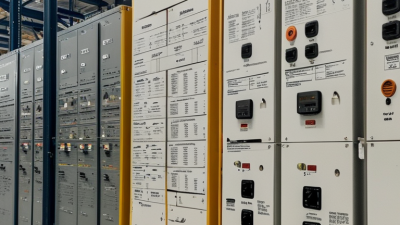

Choosing a Breaker Box manufacturer is not simply a price comparison. Buyers need to examine enclosure materials, rated current, busbar design, wiring space, and compatibility with protective devices. A cabinet may look sturdy in a product photo. Its datasheet, certifications, and production controls deserve closer attention.
A practical paraphrase of electrical educator Mike Holt’s safety-first teaching is: “Choose protection and compatibility before price.” This is a guiding principle, not a verbatim quotation. It matters when comparing manufacturers in China, where product ranges, export experience, testing practices, and documentation can vary widely. Ask for current technical files, clear model references, and evidence supporting stated ratings. Small details count. A missing dimension or unclear terminal specification can slow installation and create avoidable questions.
This Top 10 Breaker Box Manufacturers in China overview is intended to help readers build a shortlist, not make an unchecked purchase decision. It considers factors such as product coverage, manufacturing capability, quality systems, customization, and communication. These criteria can reveal useful differences, but they do not replace project-specific engineering review. One weakness remains: public information does not always show how consistently a factory performs across production batches. That deserves reflection. Before ordering, confirm the exact configuration, request samples where practical, and verify that the selected Breaker Box suits the intended installation and local requirements. A careful comparison takes time. It is worth it.
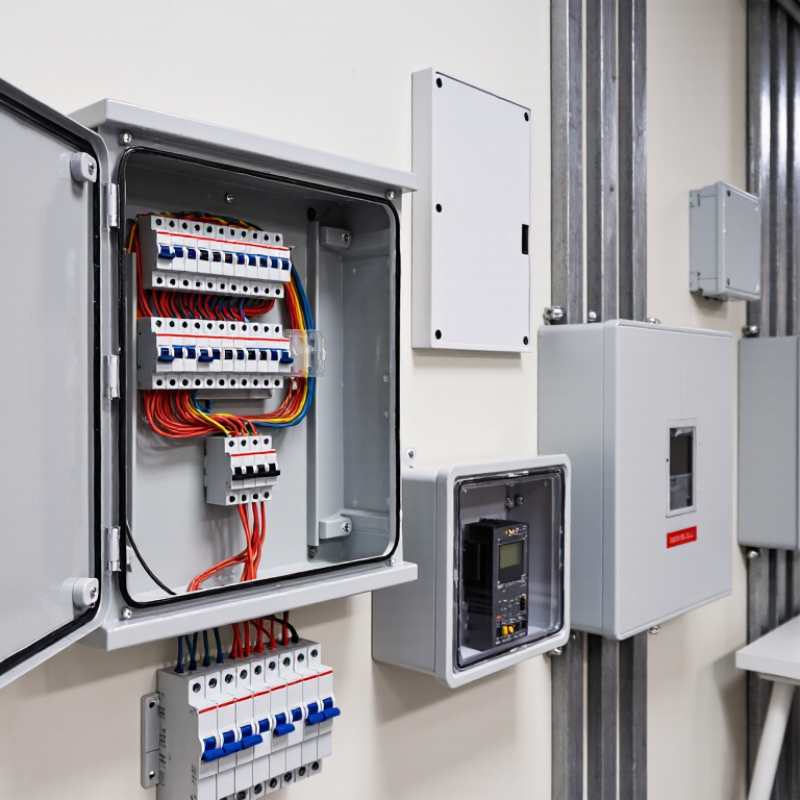
Understanding a breaker box starts with its job: distributing electricity from the incoming supply to separate circuits. Inside, bus bars carry power, while individual circuit breakers connect to lighting, outlets, and appliances. If a circuit draws more current than its breaker is designed to handle, the breaker can trip and interrupt the flow. That matters. It helps limit overheating risks, but it cannot make damaged wiring safe.
A typical home panel may serve kitchen outlets, bedroom lights, and a dedicated appliance circuit. Clear labels make it easier to identify the right circuit during maintenance or an outage. A loose connection, corrosion, or a breaker that trips repeatedly deserves attention from a qualified electrician. Don’t keep resetting it without finding the cause. A warm panel cover or a faint burning smell also needs prompt professional assessment.
Breaker boxes vary in capacity, layout, and installation requirements, so choosing one involves more than counting switches. The panel must suit the building’s expected electrical load and work with compatible breakers. Ratings and installation details matter. Even a tidy-looking panel can conceal a poor connection, which is easy to overlook. Regular inspection can help reveal wear, but it does not replace correct installation or repairs by a trained professional.
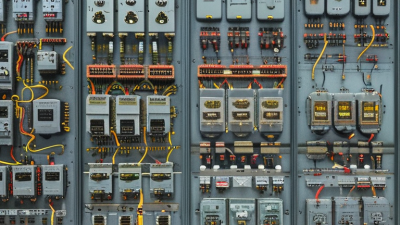
Breaker boxes are available in various current ratings to suit different electrical loads. The values shown are commonly encountered nominal ratings, not a ranking of manufacturers; actual suitability depends on the installation and local electrical codes.
Main-bus rating is the maximum current the panel is designed to carry. It does not, by itself, determine the usable capacity of an electrical service.
A reliable evaluation starts with the product’s intended use. Check rated current, breaking capacity, pole configuration, and enclosure protection against the project requirements. Ask for test reports that identify the tested model, conditions, and results. A certificate alone may not show how a specific enclosure performs. Details matter.
Inspect the construction, too. Look at busbar spacing, terminal finish, wiring access, and whether the cover closes evenly without pressure. Ask how temperature-rise, insulation, and mechanical checks are recorded during production. Traceability should connect a finished unit to its components and inspection records. Ask for evidence. A factory visit or independent sample inspection can help confirm that documented procedures match actual work.
Supplier comparisons should include more than unit price. Clarify customization limits, minimum order quantities, lead times, spare-part availability, and how defects are handled. Request a sample and test it under realistic installation conditions, not just on a clean desk. I would still question vague answers, even when the paperwork looks complete. Some details can be missed during a quick review, so keep a written checklist and record any unresolved points before placing an order.
A useful guide to the top 10 breaker box manufacturers in China should compare more than price and product photos. A breaker box must suit the intended circuit layout, installation environment, and rated current. Check enclosure thickness, busbar material, terminal spacing, and whether doors close securely. Small details matter. Ask whether the manufacturer can provide dimensional drawings, test records, and clear instructions for installation and maintenance. These documents help buyers verify claims before placing an order.
The ten manufacturers can also be assessed by production consistency and communication. Request samples or inspect a finished unit for sharp edges, loose fittings, uneven coating, and legible circuit labels. Ask how the supplier handles design changes and quality checks between production batches. Ask for proof. Certifications and testing requirements vary by destination, so confirm them with a qualified local professional rather than relying on a sales statement. A low quoted price may omit accessories or packaging details. That can be easy to miss. I would also compare lead times against actual production capacity; a polished catalogue alone does not tell the whole story. No shortlist is perfect, but a documented comparison makes the choice more grounded.
| No. | Comparison Dimension | What to Check | Relevant Standard or Industry Reference |
|---|---|---|---|
| 1 | Product type | Confirm whether the enclosure is a residential load center, a distribution board, or an industrial switchboard; these terms do not always describe interchangeable products. | IEC 61439 series covers low-voltage switchgear and controlgear assemblies; IEC 61439-3 addresses distribution boards intended to be operated by ordinary persons. |
| 2 | Applicable certification | Check that the certification applies to the exact assembly, configuration, and destination market—not just to an individual component. | Common references include IEC 61439, UL 67 for panelboards, and applicable national adoption or certification requirements. |
| 3 | Circuit-breaker compatibility | Verify the approved breaker types, frame sizes, pole configurations, and permitted combinations for the enclosure. | IEC 60898-1 covers certain AC circuit-breakers for household and similar installations; IEC 60947-2 covers circuit-breakers within its industrial scope. UL 489 is a common North American reference for molded-case circuit-breakers. |
| 4 | Rated electrical values | Compare rated voltage, frequency, current, and short-circuit withstand or breaking capacity with the project design and local electrical rules. | Values are product-specific and must be taken from the nameplate, tested documentation, and assembly technical file. |
| 5 | Enclosure material | Check the specified metal or insulating material, corrosion protection, coating system, and suitability for the installation environment. | Material selection depends on indoor or outdoor use, exposure, mechanical conditions, and the requirements of the applicable product standard. |
| 6 | Ingress protection | Confirm the declared IP rating for the complete assembled enclosure, including doors, cable entries, and installed accessories. | IEC 60529 defines the IP Code classification for protection provided by enclosures. |
| 7 | Busbar and terminal design | Review conductor material, current rating, terminal compatibility, clearances, and the documented temperature-rise performance of the assembly. | Assembly performance must be assessed as part of the complete switchgear or distribution-board design, not inferred from busbar material alone. |
| 8 | Installation and wiring | Check mounting method, cable-entry options, wiring space, neutral and protective-earth arrangements, and installation instructions. | Requirements depend on the product design and the electrical installation rules applicable in the destination country. |
| 9 | Testing and documentation | Request applicable test reports, routine verification records, drawings, ratings, installation guidance, and traceable product identification. | IEC 61439 specifies design verification and routine verification requirements for assemblies within its scope. |
| 10 | Customization and supply capability | Evaluate whether project-specific dimensions, circuit layouts, labeling, packaging, and documentation can be supplied and controlled consistently. | Confirm requirements, tolerances, lead times, and change-control arrangements directly in the technical specification and purchase agreement. |
A comparison of China’s breaker box manufacturers should begin with product fit, not catalog size. Common offerings include modular distribution boards, metal-clad panels, consumer units, and weather-resistant enclosures. Some are designed for homes; others serve workshops, commercial buildings, or industrial control rooms.
Outdoor models need suitable ingress protection, while indoor boards may prioritize compact installation and clear circuit labeling. Small details matter.
Standards depend on the product and destination market. Buyers can ask whether low-voltage assemblies are tested against relevant IEC 61439 requirements and applicable Chinese GB/T standards. A certificate should match the exact model, configuration, and rating. It is not enough to see a standards logo in a brochure.
Manufacturing capability matters too: look for controlled sheet-metal cutting, reliable busbar processing, consistent coating thickness, and documented routine tests. Ask how the factory checks insulation, temperature rise, and mechanical fit, where applicable. A good supplier should share drawings, material details, and test records before production.
Yet paperwork can still miss a practical weakness, such as crowded wiring space. Reviewing a sample may reveal more than another sales call.
When comparing breaker box manufacturers in China, start with the installation conditions, not the catalog price. Define the required current rating, pole count, enclosure size, and indoor or outdoor use. Ask for clear drawings and confirm that the busbar layout fits your circuit plan. Small details matter. A few millimeters can affect wiring space and service access.
Tips: Request sample units and recent test reports. Check terminal tightness, door alignment, labeling, and finish. Ask how production batches are inspected.
Review the manufacturer’s quality controls, material traceability, and ability to keep specifications consistent across repeat orders. Test reports should match the exact product configuration, not merely a similar model. Discuss packaging, lead times, spare parts, and warranty handling before signing an order. If possible, inspect the factory or arrange an independent audit. A polished showroom is useful, but it cannot prove stable production. I would also ask what happens when a sample passes but a later batch does not; some suppliers give vague answers, and that deserves a closer look. Favor clear written commitments over reassuring promises.