 Intelligent Manufacturing / Industry 4.0
 Motor Control Center MCC
 Data Center
 Environmental Industry
 Industrial Machinery
 New Energy
 Pharmaceutical Manufacturing
 Petroleum & Chemical
 Marine & Offshore & Ship
 Food processing / agricultural production
Leave Your Message
Choosing among China’s top Breaker Box manufacturers requires more than comparing prices or counting product models. A dependable supplier must demonstrate technical experience, stable production, verified materials, and clear quality procedures. The enclosure should feel rigid, the door should close evenly, and internal wiring should appear orderly rather than crowded. Small details often reveal larger manufacturing habits.
Electrical educator Mike Holt offers a practical principle: “Choose equipment for the system, not the label.” This idea matters when evaluating a Breaker Box for residential, commercial, or industrial use. Buyers should examine rated voltage, current capacity, short-circuit performance, enclosure protection, thermal behavior, and compatibility with the intended breakers. Factory testing records and traceable inspection documents also deserve careful attention. Certifications should be checked against the destination market’s requirements, not accepted from a brochure alone.
Do not trust polished photos.
A serious manufacturer should explain its testing process, material sources, customization limits, and after-sales support. Ask whether the company has experience with similar installations. Request drawings, sample units, and independent certification details where appropriate. I have found that the lowest quotation can become expensive after redesigns, delays, or field failures. Yet higher pricing does not automatically prove better quality. That assumption needs challenging.
The strongest choice balances engineering evidence, production consistency, communication, and long-term service. A careful comparison may feel slower, but it reduces uncertainty before the Breaker Box reaches the job site. Manufacturers should welcome difficult questions. If they avoid them, reconsider the partnership.
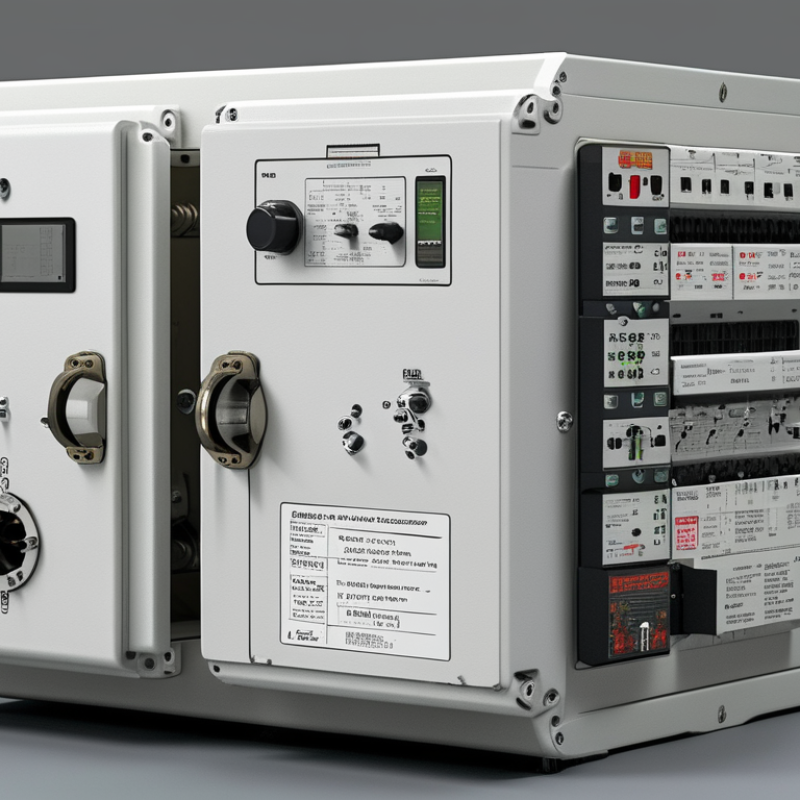
A breaker box, also called a distribution board, receives incoming power and sends it safely through separate circuits. Each breaker interrupts current during overloads or short circuits. Inside, the busbar, neutral terminal, grounding system, and enclosure work together under heat and fault stress.
Manufacturer selection matters because small design weaknesses can become serious field problems. The IEA Electricity 2024 report expects global electricity demand to grow by an average of 3.2% annually from 2024 to 2026. Meanwhile, IRENA reported 473 GW of renewable capacity additions in 2023. More distributed generation means more complex protection and connection requirements. A suitable Chinese manufacturer should show verified test reports, rated short-circuit capacity, temperature-rise results, and compliance with IEC 61439 or the required regional standard. Do not trust a certificate alone. Check its scope and expiration.
Look closely at copper or aluminum busbar quality, breaker coordination, enclosure protection, labeling, and production traceability. Ask whether every unit receives routine testing before shipment. Clear drawings and responsive technical support also matter during installation. A low quotation may look efficient. It may hide thinner metal, weaker terminals, or limited testing. That risk is easy to underestimate. Factory audits, sample inspections, and documented corrective actions provide stronger evidence than polished catalog images. Even experienced buyers can focus too heavily on price; that is one judgment worth revisiting.
| Evaluation Dimension | What to Verify | Relevant Technical Reference or Typical Value | Why It Matters |
|---|---|---|---|
| Product Definition | Confirm whether the enclosure is a consumer unit, distribution board, panelboard, or a complete assembly with protective devices. | A breaker box normally houses circuit breakers, busbars, neutral terminals, earth terminals, and an enclosure. | Clear product scope prevents mismatches between the enclosure, breakers, wiring system, and installation environment. |
| Applicable Standard | Request the exact standard, edition, test report, and certificate applicable to the intended market. | IEC 61439 covers low-voltage switchgear and controlgear assemblies; IEC 60670 covers boxes and enclosures for electrical accessories; IEC 60898-1 covers circuit-breakers for household and similar installations. | Standards provide a basis for checking electrical safety, temperature rise, dielectric strength, mechanical performance, and documentation. |
| Rated Current | Check the assembly rating, main incoming device rating, busbar rating, and terminal capacity. | Common low-voltage distribution ratings include 63 A, 100 A, 125 A, 250 A, and 400 A, depending on the design and application. | The lowest-rated component can limit the safe operating capacity of the entire breaker box. |
| Rated Voltage | Verify operating voltage, frequency, phase configuration, and insulation voltage. | Typical systems include 230 V single-phase and 400 V three-phase, while actual requirements vary by country and electrical network. | Correct voltage compatibility is essential for insulation coordination and reliable protection. |
| Short-Circuit Capacity | Check the short-circuit withstand rating of the assembly and the breaking capacity of the installed circuit breakers. | Miniature circuit breakers commonly have breaking-capacity values such as 6 kA or 10 kA; the required value must be calculated for the installation. | Adequate fault-current withstand reduces the risk of fire, enclosure damage, and unsafe failure during a short circuit. |
| Ingress Protection | Select the IP rating according to indoor, outdoor, dusty, wet, or wash-down conditions. | IEC 60529 defines IP codes; IP20 protects against solid objects over 12.5 mm, while higher ratings provide greater protection against dust and water. | The correct enclosure rating helps prevent electric shock, corrosion, contamination, and moisture-related faults. |
| Enclosure Material | Compare insulated plastic, galvanized steel, stainless steel, UV resistance, flame resistance, and corrosion resistance. | Material selection should reflect ambient temperature, humidity, sunlight, chemical exposure, impact risk, and required mechanical strength. | Material quality affects service life, fire behavior, enclosure strength, and protection of internal components. |
| Thermal Management | Ask for temperature-rise verification, ventilation design, spacing information, and derating guidance. | IEC 61439 includes temperature-rise verification for assemblies; actual limits depend on the assembly design and components. | Excessive heat accelerates insulation aging and may cause nuisance tripping or premature component failure. |
| Busbar and Terminal Design | Check conductor material, cross-section, plating, terminal torque range, neutral arrangement, and earth-bonding provisions. | Copper and aluminum are common conductor materials; the permitted current depends on cross-section, insulation, temperature, and installation method. | Reliable connections reduce resistance heating, voltage drop, arcing, and maintenance problems. |
| Breaker Compatibility | Confirm breaker dimensions, mounting method, pole spacing, busbar profile, accessory compatibility, and approved combinations. | DIN-rail systems commonly use 35 mm mounting rails according to IEC 60715, but product compatibility must still be verified. | Mechanical or electrical incompatibility can cause loose connections, overheating, incorrect isolation, or installation failure. |
| Number of Ways and Spare Capacity | Review the number of outgoing circuits, available module space, cable entry space, and future expansion allowance. | Modular products are often specified by DIN modules; one single-pole module is commonly 17.5 mm wide, although actual layouts vary. | Spare capacity simplifies future upgrades and reduces the need for replacement or overcrowded wiring. |
| Protection Functions | Determine whether the design requires MCBs, MCCBs, RCDs/RCCBs, RCBOs, surge protective devices, or isolation switches. | RCD protection is designed to detect residual current; the required residual-current rating and time characteristic depend on local code and application. | Correct protection selection helps address overload, short circuit, electric shock, earth leakage, and transient overvoltage risks. |
| Testing and Quality Control | Request routine-test records, incoming-material inspection, dimensional checks, torque verification, and traceability procedures. | IEC 61439 requires routine verification for relevant low-voltage assemblies before delivery. | Documented testing provides evidence that each production batch conforms to the approved design. |
| Customization Capability | Evaluate custom dimensions, circuit layouts, labels, cable glands, door locks, communication accessories, and color requirements. | Customization should be supported by controlled drawings, a bill of materials, samples, and documented design changes. | Controlled customization improves installation efficiency without compromising electrical or mechanical performance. |
| Documentation | Check whether the supplier provides datasheets, wiring diagrams, installation instructions, test reports, certificates, and spare-part information. | Documents should identify ratings, operating conditions, applicable standards, component references, and revision status. | Complete documentation supports approval, installation, maintenance, troubleshooting, and regulatory inspections. |
| Supply and After-Sales Reliability | Assess lead time, minimum order quantity, production capacity, packaging, warranty terms, response time, and replacement-part availability. | Supplier performance should be evaluated using documented delivery records, inspection results, corrective-action procedures, and service agreements. | Reliable supply and technical support reduce project delays, maintenance downtime, and lifecycle cost. |
| Total Cost of Ownership | Compare product price together with testing, installation labor, energy losses, spare parts, maintenance, transport, and compliance costs. | The lowest purchase price does not necessarily provide the lowest lifecycle cost. | A balanced evaluation helps avoid hidden costs caused by poor compatibility, rework, failures, or unavailable components. |
Note: Ratings and standards must be confirmed against the installation country, local electrical code, system design, and the supplier’s current technical documentation.