Who Are the Top Measuring Tank Manufacturers in China?
Choosing the right Measuring Tank manufacturer in China requires more than comparing prices or polished product photos. Tank accuracy affects batching, inventory control, production consistency, and compliance records. A small calibration error can become a costly material loss over time.
Lord Kelvin, a leading authority on scientific measurement, famously said, “If you cannot measure it, you cannot improve it.” That principle remains highly relevant to Measuring Tank selection. Reliable manufacturers should demonstrate practical experience, documented testing, stable materials, and clear technical support. Their tanks may serve chemical plants, food processors, pharmaceutical facilities, water-treatment projects, or industrial storage sites. Each application demands different capacities, sensors, linings, pressure ratings, and cleaning requirements.
This guide examines several leading Chinese manufacturers through a practical and evidence-based lens. It considers product engineering, dimensional accuracy, welding quality, automation compatibility, certification records, export experience, and after-sales service. Factory capability matters. So does communication after delivery.
No ranking is perfect. Public information can be incomplete, and manufacturers sometimes describe performance differently. For that reason, buyers should verify drawings, inspection reports, material certificates, and reference projects before signing contracts. Site conditions also deserve attention; a technically strong tank may still fail when installation space, temperature, or maintenance access is overlooked.
The companies discussed here represent different strengths rather than one universal winner. Some focus on custom fabrication. Others provide integrated measurement systems or standardized industrial vessels. Understanding that difference can help buyers create a shorter, more realistic, and technically defensible supplier list.
What Is a Measuring Tank and Where Is It Used?
What Is a Measuring Tank and Where Is It Used?
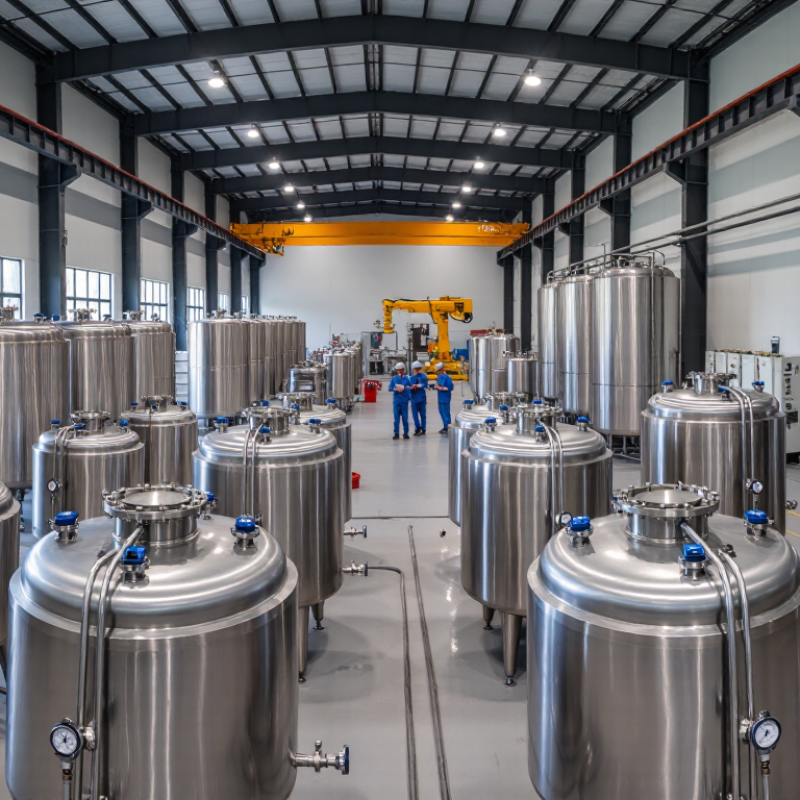
A measuring tank is a calibrated vessel for storing, checking, and transferring liquids. It combines a tank body, level scale, sensor, outlet valve, and sometimes a mixer. Operators use the measured volume to control batching, dosing, and cleaning processes.
A tank may look simple. It is not.
Measuring tanks serve water treatment, food processing, chemical production, agriculture, and pharmaceutical manufacturing. The 2024 United Nations World Water Development Report states that agriculture accounts for about 70% of global freshwater withdrawals. This explains the need for accurate irrigation tanks and fertilizer dosing systems. In factories, operators may measure process water, additives, cleaning liquids, or wastewater before treatment. Transparent sight glasses help during manual checks. Digital sensors improve repeatability, but they still need calibration.
For buyers comparing Chinese manufacturers, practical evidence matters more than polished catalogs.
Request material certificates, calibration records, weld inspection results, and pressure-test documents. Stainless steel grade, internal finish, dead zones, and sensor compatibility deserve close attention. Reports from the International Society of Automation link reliable measurement with better process control and reduced operating variation.
Yet measurement errors remain possible. Temperature changes can alter liquid volume, and an incorrectly positioned sensor can mislead operators. A careful supplier should explain these limits clearly, not hide them.
Which Chinese Manufacturers Are Recognized for Measuring Tanks?
Chinese measuring tank manufacturers are increasingly recognized for custom engineering, export capability, and practical production experience. Their products commonly include stainless steel calibration tanks, chemical storage vessels, and process tanks with integrated level measurement. The best suppliers provide dimensional drawings, material certificates, weld inspection records, and calibration documentation. These details matter on a factory floor.
A 2024 MarketsandMarkets report valued the global tank level monitoring market at over USD 1 billion and forecast continued growth through 2029. This demand supports China’s large manufacturing base, especially for food processing, water treatment, energy, and chemical production. Industry suppliers with ISO 9001 systems, pressure-vessel qualifications, and traceable testing are more credible. Buyers should also check nozzle accuracy, surface finish, sensor compatibility, and delivery records. A polished brochure is not enough.
Research from Grand View Research reports strong growth in industrial sensors, driven by automation and remote monitoring. Chinese manufacturers recognized in this field usually combine tank fabrication with radar, ultrasonic, or load-cell integration. Some provide on-site commissioning and replacement parts, which can reduce downtime. Yet no shortlist is flawless. Factory visits may reveal inconsistent welding or weak documentation. I would request a sample inspection report, measure the tank manually, and compare it with the digital reading. That small test often exposes overlooked errors.
How Do Leading Measuring Tank Manufacturers Compare?
Leading measuring tank manufacturers in China differ less by appearance than by measurement discipline. The strongest suppliers typically provide calibrated volume tables, traceable certificates, material records, and documented leak tests. They also explain uncertainty, rather than promising perfect accuracy. That matters when tanks support fuel, chemical, water, or process control applications.
A 2024 Mordor Intelligence assessment places the broader industrial storage tank market above USD 13 billion, with annual growth near 4%. This wider figure is not a direct measuring tank statistic, but it shows rising demand for controlled storage equipment. In comparison, larger Chinese manufacturers often offer automated welding, stainless-steel fabrication, and project engineering. Smaller specialists may respond faster and customize tank geometry more willingly. Delivery can vary sharply.
Look beyond the quotation.
The better comparison uses measurable evidence. Check calibration intervals, reference instruments, surface-finish data, dimensional tolerances, and after-sales response times. ISO 9001 certification supports process consistency, but it does not prove measurement accuracy by itself. OIML recommendations and national metrology requirements provide stronger technical reference points. A 2023 International Trade Centre database review also shows China’s extensive export activity in fabricated metal equipment, but export volume cannot replace inspection evidence. Factory videos are useful, yet incomplete. I would request a witnessed factory acceptance test, sample calibration records, and a clear correction policy. Price still matters, although the cheapest tank may create expensive rework.
Who Are the Top Measuring Tank Manufacturers in China?
How Do Leading Measuring Tank Manufacturers Compare?
This market-neutral chart presents nominal capacity points commonly used when specifying industrial measuring tanks in China. Leading manufacturers typically serve several of these capacity ranges, with the final selection depending on the required accuracy, liquid type, material, calibration method, and installation conditions.
The capacity values are reference specification points rather than company-specific sales data. Actual product ranges and technical performance may vary by manufacturer and application.
What Should Buyers Consider When Choosing a Chinese Manufacturer?
Choosing a Chinese measuring tank manufacturer requires more than comparing online rankings or factory photographs. Buyers should examine manufacturing experience, engineering capability, and product consistency. Ask how long the company has produced measuring tanks and which industries it serves. Request drawings, material certificates, dimensional tolerances, and calibration records. A reliable supplier should explain measurement accuracy in practical terms, not only promise “high quality.”
Factory verification matters. Review production areas, welding procedures, surface finishing, and inspection equipment through a video audit or independent visit. Check whether each tank receives pressure, leakage, dimensional, and functional testing before shipment. Traceable serial numbers and complete inspection reports can prevent confusion later. It is also useful to request a sample or reference project with similar capacity and operating conditions. Details matter.
Communication often reveals more than a sales brochure. The manufacturer should confirm tank volume, measuring range, temperature conditions, connections, cleaning requirements, and packaging needs. Clarify warranty coverage, spare parts, installation guidance, and response times before signing an order. A low quotation may look attractive. It may also exclude testing, calibration, or stronger materials.
Buyers should compare total ownership cost, not only the initial price. Ask whether production updates are shared with photographs and inspection milestones. Some suppliers answer quickly but avoid technical questions. That is a warning sign. Even experienced buyers can overlook local installation conditions, so the specification should be reviewed by an independent engineer when possible. A careful decision may take longer, but it reduces costly adjustments after delivery.

 Intelligent Manufacturing / Industry 4.0
 Motor Control Center MCC
 Data Center
 Environmental Industry
 Industrial Machinery
 New Energy
 Pharmaceutical Manufacturing
 Petroleum & Chemical
 Marine & Offshore & Ship
 Food processing / agricultural production