China Top 10 Traffic Control Cabinet Manufacturers
A Traffic Control Cabinet may look like a steel box beside an intersection. Inside, it protects controllers, power equipment, communications devices, and carefully arranged wiring. Its performance can affect signal uptime, maintenance time, and the clarity of field operations. Traffic-systems engineer Daniel Lee offers a practical reminder: “A cabinet is reliable only when its protection, layout, and service access work together.” Buyers should treat that as a design principle, not a substitute for documented specifications.
This guide to China’s top 10 Traffic Control Cabinet manufacturers examines the details that matter beyond a product photo. We consider enclosure construction, corrosion protection, thermal management, wiring access, customization, production capability, and after-sales support. A well-fitted door, readable terminal labels, and clean cable routing can make routine inspection easier. Small details count. Yet a polished catalog does not prove long-term reliability. Request test records, material details, configuration drawings, and clear warranty terms before comparing suppliers.
The list is intended as a starting point, not a universal ranking. Project needs differ by climate, intersection layout, control equipment, and maintenance practice. Some buyers may prioritize compact cabinets; others may need space for communications hardware or future expansion. Those trade-offs deserve a closer look. Manufacturer claims should be checked against project requirements and available documentation. There is no perfect cabinet for every site. This overview helps procurement teams ask sharper questions and identify manufacturers worth evaluating for their specific traffic-control projects.
What Traffic Control Cabinets Do and Where They Are Used
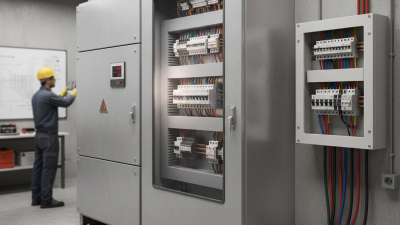
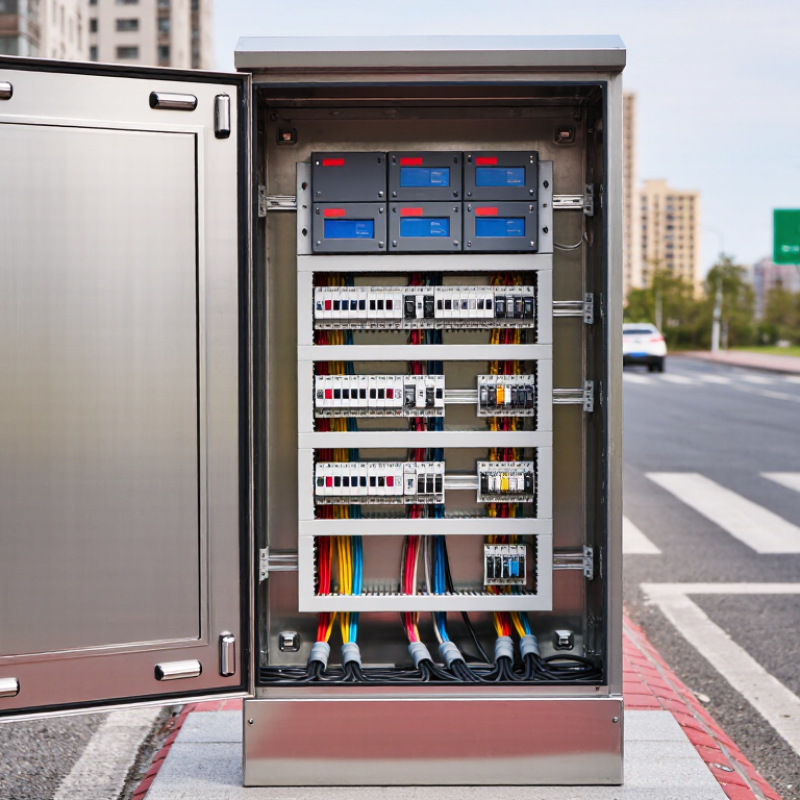
Traffic control cabinets are weather-resistant enclosures that protect equipment coordinating road signals. Inside, controllers manage timing plans, while relays, power supplies, and communication units connect field devices. Some cabinets also receive data from vehicle detectors or pedestrian push buttons. They are practical workspaces too. Technicians may inspect terminals, replace a fuse, or check a connection during scheduled maintenance. That matters daily.
These cabinets are commonly installed beside urban intersections, pedestrian crossings, highway ramps, and road junctions. At a busy intersection, one cabinet can help coordinate several signal heads and crossing indicators. On a highway ramp, it may support metering signals that regulate vehicle entry. Placement affects reliability: direct afternoon sun, standing water, dust, and vibration can all challenge the enclosure and its components. Heat changes things.
A well-planned cabinet needs suitable weather sealing, ventilation or temperature control, organized wiring, and enough room for safe servicing. The exact arrangement depends on local equipment and site conditions; one standard layout will not suit every road. A cabinet also cannot fix poor signal timing or faulty detectors by itself. It is one part of a wider traffic control system, and maintenance records can reveal problems that a quick visual check misses.
How to Evaluate Traffic Control Cabinet Manufacturers in China
When comparing traffic control cabinet manufacturers in China, look beyond cabinet size and quoted price. Ask how the enclosure handles heat, moisture, dust, and vibration. Check dimensions, door seals, coating, cable entries, and ventilation filters. Request drawings and a clear bill of materials before approval. Good paperwork matters.
Ask for test records covering temperature rise, insulation, and ingress protection suitable for the project. A capable supplier should explain component sourcing, wiring checks, and production inspections in plain terms. When practical, arrange a sample inspection or factory audit; photographs alone leave blind spots. Also ask how design revisions are recorded. A late terminal change can complicate site installation.
Evaluate service after delivery, not just manufacturing capacity. Confirm response times, spare-part availability, and whether technicians can help troubleshoot using wiring diagrams. Speak with past customers about delivery accuracy and how problems were handled. No checklist catches everything. A factory report may not reveal awkward cable routing until installers open the cabinet on site, so review the layout with the people who will connect it.
China’s Top 10 Traffic Control Cabinet Manufacturers
China’s top 10 traffic control cabinet manufacturers should be compared by practical performance, not promotional claims alone. A cabinet may stand beside a busy road through rain, dust, and summer heat. Its enclosure, door seals, ventilation, and corrosion protection all affect service life. Buyers should check whether the stated materials suit the installation environment.
Manufacturing consistency
Look for clear wiring diagrams, labeled terminals, documented inspection steps, and test records that match the supplied configuration. Ask how the manufacturer handles customization, replacement parts, and technical questions after delivery. Details matter. A polished sample cabinet is useful, but it cannot show how every production unit is checked.
Choosing the right fit
A ranked list can offer a starting point, yet rankings may rely on different criteria. Verify production capacity, quality procedures, and relevant project experience directly. If possible, review cabinet drawings and inspect a finished unit before placing an order. One comparison table may still miss important differences, especially when projects have unusual space or climate constraints.
The strongest choice is the one whose specifications, documentation, and support fit the actual site.
Key Products, Technologies, and Certifications to Compare
When comparing China’s top traffic control cabinet manufacturers, look beyond enclosure size and price. Check whether each supplier offers outdoor-rated cabinets, junction boxes, mounting hardware, and layouts tailored to signal controllers. Ask for drawings that show rail spacing, cable entry points, ventilation, and service clearance. Small details matter. A technician should be able to reach terminals without removing half the assembly.
Technology claims need practical evidence. Compare corrosion-resistant finishes, door seals, thermal management, surge protection, and options for remote monitoring. Request test records for ingress protection and electromagnetic compatibility, and confirm that results apply to the exact cabinet configuration. Certifications may include quality-management credentials or product approvals, but their relevance depends on the destination market and project specifications. Verify certificate scope, issuer, and validity directly. A logo on a brochure is not enough.
Also compare wiring diagrams, inspection procedures, spare-part availability, and response times for technical questions. Ask how each manufacturer handles changes to controller dimensions or site wiring. The answers reveal more than a polished sample cabinet. Still, comparisons are imperfect: test conditions and project needs can differ, and a neat factory sample may not reflect a rushed installation. Review recent production records where available, then match evidence to the actual operating environment.
China Top 10 Traffic Control Cabinet Manufacturers - Key Products, Technologies, and Certifications to Compare
Enclosure protection benchmarks for comparing traffic control cabinet specifications
This standards-based comparison uses IP code digits defined by IEC 60529, not manufacturer-specific data or rankings. The first digit indicates protection against solid particles (5: dust-protected; 6: dust-tight); the second indicates water protection (4: splashing, 5: water jets, 6: powerful water jets). These digits are classification codes, not linear performance scores. Verify each cabinet’s rated protection and supporting documentation with its supplier.
How to Select a Supplier for Your Traffic Control Project
Selecting a traffic control cabinet supplier starts with the project’s operating conditions, not the lowest quotation.
Check controller compatibility, wiring diagrams, power protection, ventilation, enclosure rating, and access for maintenance. Ask for test records and documentation showing how each cabinet configuration is verified. Small details matter.
The FHWA’s 2008 Traffic Signal Timing Manual reports more than 300,000 traffic signals in the United States and estimates that improved timing can reduce congestion by 10–20%. That figure describes timing improvements, not cabinet performance, but it highlights the value of dependable field equipment. Compare suppliers on documented quality checks, delivery lead times, spare-part availability, and technical support after installation. In coastal or dusty locations, request evidence that the enclosure and finish suit the actual environment. A low bid can become costly if replacement parts are hard to source. I would also ask how design changes are recorded; this step is easy to overlook, even in a well-prepared procurement plan.

 Intelligent Manufacturing / Industry 4.0
 Motor Control Center MCC
 Data Center
 Environmental Industry
 Industrial Machinery
 New Energy
 Pharmaceutical Manufacturing
 Petroleum & Chemical
 Marine & Offshore & Ship
 Food processing / agricultural production