
Choosing the best Soft Start Control Panel in 2026 requires more than comparing price tags and current ratings. A suitable panel should reduce motor inrush, protect mechanical equipment, and simplify daily maintenance. It must also match the motor’s voltage, load profile, enclosure location, and operating environment. A panel installed beside a dusty pump room faces different demands from one used in a clean factory.
Thomas E. Kissell, a respected industrial motor-control author, writes, “A motor starter is a device used to start and stop a motor.” That basic function still matters. However, modern Soft Start Control Panel designs add controlled acceleration, reduced voltage stress, bypass contactors, overload protection, and clearer diagnostics. These features can help protect pumps, conveyors, compressors, and fans from harsh starting conditions.
Small details matter.
A reliable evaluation should examine starting torque, ramp settings, thermal capacity, fault codes, ventilation, and service access. Field experience also reveals inconvenient truths. A powerful soft starter may perform poorly when its settings are copied without testing. A cheaper panel may create higher costs through nuisance trips, heat buildup, or difficult repairs. I have seen specifications look impressive while the installation details remained unclear.
This guide compares the key options available in 2026. It considers performance, safety, controls, durability, installation support, and long-term value. The final choice should not follow marketing language alone. It should reflect measured motor behavior, site conditions, and the people responsible for maintaining the equipment.
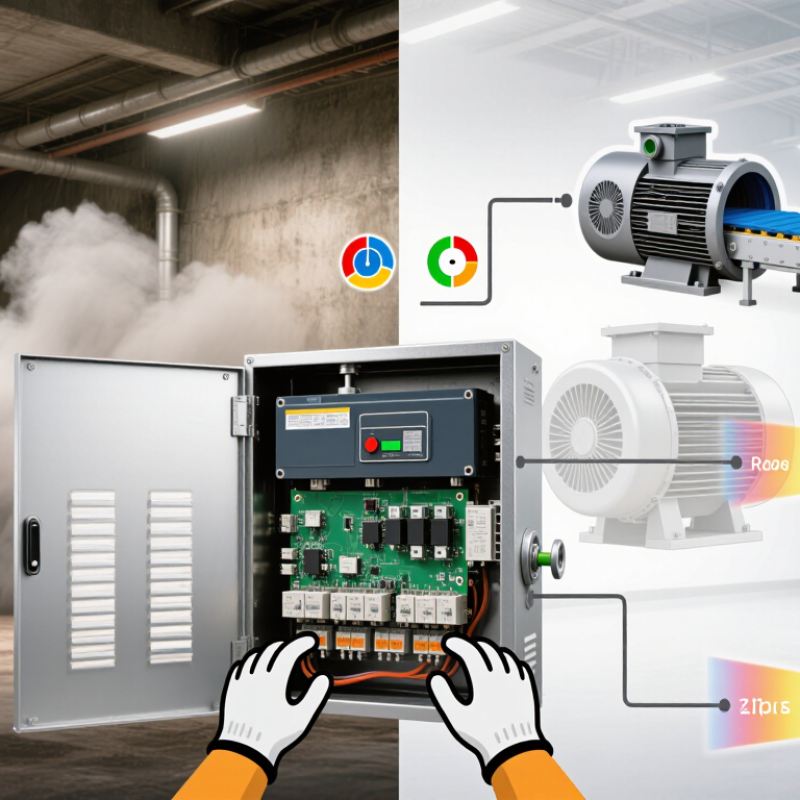
The best soft start control panel in 2026 is not defined by its enclosure or display. Its value begins with controlled motor acceleration, reduced inrush current, and dependable stopping. A soft start panel normally combines an AC semiconductor motor controller, bypass equipment, overload protection, isolation, and control circuitry. The layout should also support heat removal, maintenance access, and clear terminal identification.
IEC 60947-4-2 IEC 60947-4-2 is central to this definition. It covers AC semiconductor controllers and starters, including equipment used with low-voltage motors. The standard addresses ratings, temperature rise, insulation, switching performance, protection, and operational tests. A panel containing a soft starter is not automatically compliant. The complete assembly may require separate verification under applicable assembly requirements, including enclosure strength and short-circuit protection.
The 2026 scope deserves careful reading. Confirm the latest adopted edition, national deviations, motor duty, rated voltage, fault current, and installation environment. Dust, heat, frequent starts, and long cable runs can change the selection. In field inspections, oversized bypass contactors are often noticed, but ventilation is sometimes neglected. That is a costly weakness. Another imperfect assumption is treating reduced starting current as reduced energy use. It mainly improves starting behavior and mechanical stress. Pumps, compressors, conveyors, and fans each need different ramp settings. The best panel is the one tested against the real motor, load profile, and protection strategy.

The key performance measure is motor inrush current, not the panel’s appearance. A direct-on-line starter commonly draws 600–800% of the motor’s full-load current, or FLA. A soft start control panel can often limit that surge to about 200–400% FLA. This reduction eases voltage dips, contactor stress, and mechanical shock during acceleration. However, the exact result depends on motor size, load torque, ramp time, and supply conditions.
Consider a 100-amp motor. DOL starting may demand 600–800 amps for several seconds. A properly adjusted soft starter may hold the peak near 200–400 amps. That can prevent lights from flickering and reduce belt or coupling strain. It may also allow a smaller upstream generator, though engineers must verify the complete starting profile. A longer ramp is not always better. Heavy pumps can stall if acceleration becomes too gentle.
Field measurements matter more than catalog estimates. Clamp-meter readings should be taken during a cold start, loaded start, and repeated cycle. Check voltage at the motor terminals, not only inside the cabinet. One common mistake is setting the current limit too low and blaming the motor when it fails to reach speed. Another is ignoring bypass contactor heating after acceleration. The best panel is therefore the one matched to the motor, driven load, protection system, and actual site measurements. Some installations still need a higher starting limit. That is not a design failure.
What Is the Best Soft Start Control Panel in 2026?
The best panel starts with the motor’s full-load amperage, or FLA, not its horsepower alone. Check the nameplate at the actual supply voltage. A 75 hp motor can draw different current at 208 V, 480 V, or 690 V. Select a soft starter with enough continuous current for the motor and its starting duty. Pumps, compressors, and conveyors may need different overload and ramp settings. Measure it.
Voltage range also deserves close attention. A panel marked for 208–690 V can support varied installations, but the complete assembly must match the system frequency, insulation, disconnects, and internal components. I have seen projects approved from a catalog sheet, then delayed because the incoming terminals could not accept the field cable. Small details matter.
Enclosure protection should fit the room, not the sales description. IP ratings help with dust and water exposure, while NEMA ratings describe broader enclosure performance. Confirm washdown pressure, condensation, heat, and outdoor sunlight. SCCR is equally important. Compare the panel’s short-circuit current rating with the available fault current at the installation point. A higher upstream breaker rating does not automatically make the panel compliant. Have a qualified engineer verify coordination, grounding, and protective-device requirements. I once underestimated heat inside a sealed enclosure, and the electronics ran hotter than expected. That mistake changed the ventilation review.
| Panel Configuration | Typical Motor FLA Range | System Voltage | Recommended Soft Starter Class | Typical Starting Current | Enclosure Rating | Typical SCCR Design Target | Bypass Arrangement | Protection and Control Features | Best-Fit Applications |
|---|---|---|---|---|---|---|---|---|---|
| Compact Light-Duty Panel | 6–32 A Approximately 2–15 hp at 460 V |
208–480 V AC Three-phase, 50/60 Hz |
Standard-duty electronic soft starter with integrated overload protection | Typically adjustable to approximately 2.5–4.5 × motor FLA | NEMA 1IP20–IP30 | 5–10 kA rms symmetrical, subject to fuse or breaker combination | Internal or integral bypass contactor for reduced heat during running | Phase-loss detection, current-limit start, ramp-up and ramp-down, electronic overload, keypad or terminal control | Small pumps, fans, conveyors, compressors, and general-purpose machinery in clean indoor locations |
| General Industrial Panel | 32–125 A Approximately 15–75 hp at 460 V |
208–600 V AC Three-phase, 50/60 Hz |
Industrial soft starter with selectable overload class and external bypass capability | Typically adjustable to approximately 2.5–5.0 × motor FLA | NEMA 12IP54 | 10–35 kA rms symmetrical, depending on SCCR-tested components | Dedicated bypass contactor with interlocking and run-status feedback | Adjustable current limit, kick-start option, motor thermal model, underload and overcurrent alarms, Modbus or hardwired I/O | Material handling, HVAC equipment, process pumps, mixers, and machine-building applications |
| Heavy-Duty Pump Panel | 80–250 A Approximately 50–150 hp at 460 V |
230–690 V AC Three-phase, 50/60 Hz |
Heavy-duty soft starter rated for frequent starts or extended acceleration | Typically adjustable to approximately 3.0–5.5 × motor FLA | NEMA 12IP55 | 25–65 kA rms symmetrical, only when supported by the selected protective-device combination | Externally mounted bypass contactor or bypass molded-case switch, with thermal coordination | Extended ramp, pump-cleaning cycle, torque control, dry-run protection, phase sequence monitoring, emergency stop circuit | Water and wastewater pumps, irrigation systems, chilled-water pumps, and high-inertia loads |
| High-Power Process Panel | 200–600 A Approximately 125–400 hp at 460 V |
380–690 V AC Three-phase, 50/60 Hz |
Medium- or high-power soft starter with forced-air cooling and service bypass provisions | Typically adjustable to approximately 3.0–6.0 × motor FLA | NEMA 12IP54–IP55 | 35–65 kA rms symmetrical, subject to documented testing and component coordination | Full-voltage bypass contactor, vacuum contactor, or service bypass switchgear as required by the design | SCR temperature monitoring, forced ventilation, redundant trip circuit, line and load disconnect, remote diagnostics | Large compressors, crushers, conveyors, fans, process pumps, and high-inertia industrial equipment |
| Outdoor Corrosion-Resistant Panel | 20–300 A | 208–690 V AC Three-phase, 50/60 Hz |
Industrial soft starter selected for ambient temperature, altitude, and outdoor duty derating | Typically adjustable to approximately 2.5–5.5 × motor FLA | NEMA 3RNEMA 4XIP65–IP66 | 10–65 kA rms symmetrical, based on the certified protective-device combination | Bypass contactor with heater, thermostat, drain/breather, and environmental sealing where required | Conformal coating, anti-condensation heater, filtered ventilation or air conditioning, surge protection, door interlock | Outdoor pumping stations, coastal facilities, washdown areas, agricultural systems, and remote installations |
| Frequent-Start or High-Inertia Panel | 40–350 A | 400–690 V AC Three-phase, 50/60 Hz |
Heavy-duty soft starter with a documented start-duty and thermal-capacity calculation | Typically limited to approximately 3.0–4.5 × motor FLA to control heating | NEMA 12IP54–IP55 | 25–65 kA rms symmetrical, dependent on the complete assembly rating | Automatic bypass after acceleration, with cooling and restart logic coordinated to the duty cycle | Start counter, thermal capacity memory, start inhibit, stall protection, adjustable overload class, event history | Loaded conveyors, centrifuges, blowers, saws, grinders, and applications requiring repeated starts |
| Harmonic-Sensitive Facility Panel | 25–250 A | 208–600 V AC Three-phase, 50/60 Hz |
Soft starter with line-reaction provisions and a low-distortion installation design | Typically adjustable to approximately 2.5–5.0 × motor FLA | NEMA 12IP54 | 10–50 kA rms symmetrical, verified with the selected upstream protection | Bypass contactor to minimize semiconductor losses during continuous operation | Phase-angle control, input reactor option, power-quality monitoring, undervoltage protection, selectable start profiles | Data centers, hospitals, laboratories, commercial buildings, and plants with sensitive electronic equipment |
Choosing the best soft start control panel depends on the motor, load profile, and installation environment. A bypass contactor can reduce heat after acceleration by removing the SCRs from continuous operation. That sounds simple, but poor timing may create switching stress or brief current disturbances. Field checks matter more than attractive specifications.
Harmonics need careful interpretation. During voltage ramping, phase-controlled SCRs can distort the supply waveform. A bypass path usually limits this effect during normal running, although it does not erase every installation problem. Measure total harmonic distortion at the supply point when possible. Also review cable length, transformer strength, and nearby sensitive equipment. IEC 61800-3 can provide a useful EMC reference where its scope applies, but the panel’s actual documentation must be checked. I would not assume compliance from a product label alone.
Tips: Compare heat dissipation at the rated current, not only the starting current. Inspect enclosure airflow, overload settings, and bypass transition records. A warm cabinet is a warning. Leave space around ventilation openings, and verify temperatures during repeated starts. In practice, the “best” panel may be the less powerful-looking option with clearer test data. One mistake is judging harmonics without measuring them. Another is ignoring mechanical shock after acceleration, which can still damage pumps, conveyors, or couplings.
What Is the Best Soft Start Control Panel in 2026?
The strongest 2026 panel is not always the cheapest quotation. Total cost of ownership includes installation time, energy losses, spare parts, service access, and unplanned downtime. A well-designed soft start panel should reduce motor starting stress without creating difficult maintenance tasks. Check terminal spacing, ventilation, bypass arrangements, and overload protection before comparing prices. Small details matter.
UL 508A compliance should be verified through the panel’s construction, not only its label. Review the wiring methods, component suitability, short-circuit current rating, grounding, enclosure type, and documented inspection process. The panel shop should provide clear schematics and traceable component records. Ask how the final SCCR was established. Vague answers are expensive later.
Maintenance access often separates a reliable panel from an attractive one. Technicians need readable labels, reachable terminals, visible status indicators, and safe isolation points. A removable fan filter can save hours in a dusty plant. It sounds minor. It is not. I would also question oversized cooling systems, because they increase replacement costs and may hide poor heat calculations. My own evaluation would include a five-year service estimate, although those forecasts are never perfect. Operating cycles, ambient temperature, and technician skill can change the result. A panel that balances compliance, accessibility, and predictable maintenance usually delivers the stronger long-term value.
2026 comparison of five-year total cost of ownership and annual maintenance requirements for common industrial soft-start panel configurations.
The UL 508A-compliant panel with a bypass arrangement provides the strongest overall lifecycle profile in this representative 30–75 HP motor benchmark. It has a higher purchase cost, but lower heat generation during normal operation, fewer maintenance hours, and documented industrial control-panel construction. UL 508A addresses panel construction and documentation; it does not by itself guarantee motor performance or system uptime.